




The Buzz Around Artificial Intelligence
As Artificial Intelligence (AI) becomes increasingly powerful and sophisticated, organizations worldwide recognize the transformative potential of AI in driving market growth and gaining a competitive edge. Major advances in AI technology have lowered the entry barrier for businesses to invest in AI research and development, fueling widespread adoption of AI across industries.The Tech Sector is Embracing Artificial Intelligence
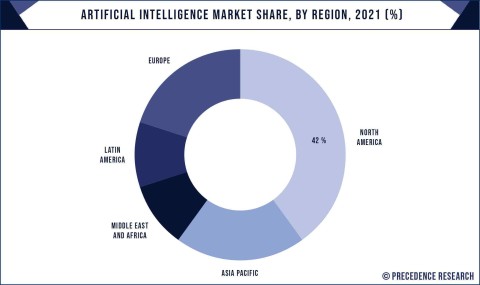
According to Precedence Research, global AI market value is projected to reach almost USD 1.5 trillion by 2030, growing at a 38.1 % Compound Annual Growth Rate (CAGR) from 2022 to 2030.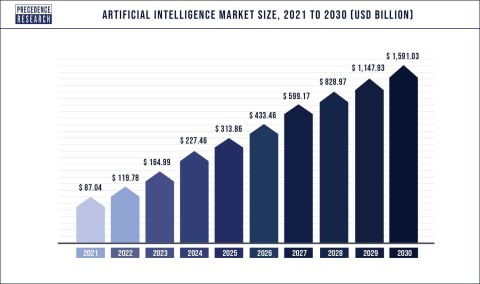
Accelerated User Adoption of Generative AI Systems
Platforms that adopted artificial intelligence early are quickly expanding available AI features. Newer software is witnessing unprecedented adoption within days of launch. As more companies develop accessible generative AI solutions including chatbots, writing and voice assistants, and image editing and generation, use and demand for generative AI solutions compounds and accelerates.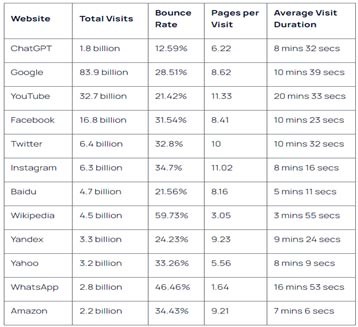
For example, Google has already implemented generative AI with Smart Reply and Smart Compose to help users save time and effort in writing emails, which completed over 180 billion suggestions in 2022. In May 2023, Google I/O announced several new AI-powered features to its products, including Help Me Write for Gmail that generates complete emails with a prompt, Immersive View for Google Maps that provides a 360-degree view of a location, Magic Eraser in Google Photos that helps users edit photos easily, and Google Bard, a conversational generative AI chatbot that helps users write, research and learn. Gmail, Google Maps, and Google Photos each have 2 billion users that are leveraging these generative AI tools.
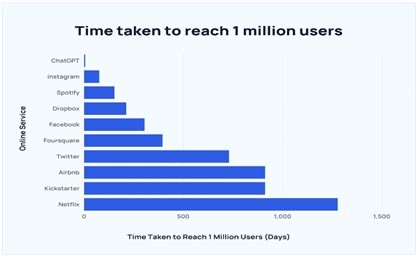
OpenAI’s ChatGPT is another powerful AI tool that acquired 1 million users in just 5 days after launching in November 2022. By comparison, it took Instagram approximately 2.5 months to reach 1 million downloads. Whereas Netflix had to wait around 3.5 years to reach 1 million users.
The ChatGPT AI chatbot has a wide range of applications, including customer support, virtual assistants, creative writing, and brainstorming. Currently with more than 100 million users, ChatGPT generates more than 1.8 billion visitors per month.

Additional Hardware Required for Generative AI
The rapid adoption of generative AI demands increasingly efficient and sophisticated hardware to support billions of users and complex computational workloads. Artificial intelligence relies on a broad technology ecosystem built on advanced material solutions that enable performance, reliability, and scalability. High-performance semiconductors must rapidly process and store massive volumes of data while operating under extreme electrical and thermal stresses. Advanced materials—including insulation, protective, and high-performance structural materials—play a critical role in managing these stresses, enhancing durability, and supporting long-term, high-performance operation. As AI demands continue to grow, next-generation material innovations are essential to enable reliable and efficient AI hardware systems.Boyd and Cooling Generative Artificial Intelligence
Boyd has decades of experience and expertise in designing and manufacturing advanced solutions that support Artificial Intelligence applications for various industries, including eMobility, cloud, medical and more. Leverage our material science heritage to design innovative AI-based solutions optimized for performance, reliability, and energy efficiency.
Our engineering and material science expertise allows us to design tailored solutions for specific applications, whether it is an optical adhesives in LiDAR sensors for autonomous vehicles, or medical equipment. To learn more about our solutions or to discuss your project needs, schedule a consultation with our experts.